
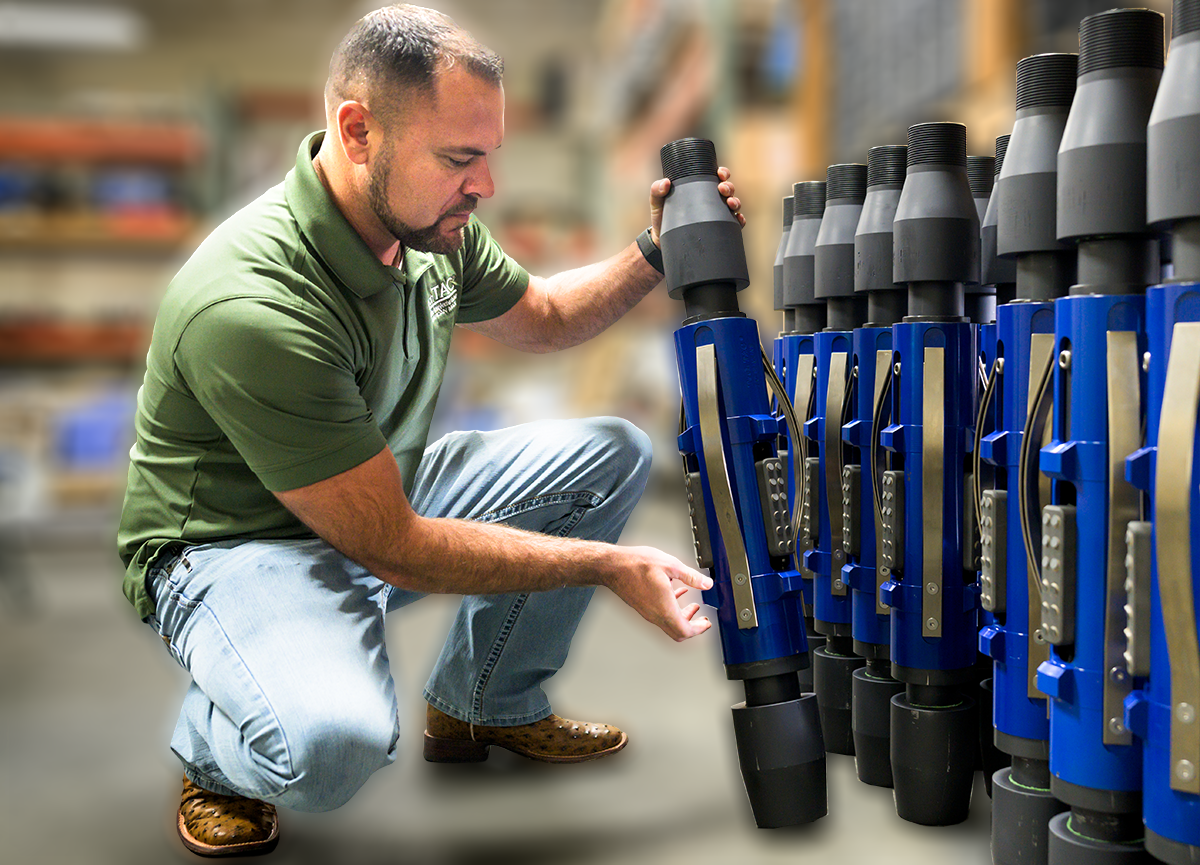
For oil and gas operators running artificial lift systems, maximizing daily output while controlling operational costs is a continuous balancing act. When looking for ways to boost rod pump performance, field engineers often focus their attention on optimizing surface units, adjusting stroke lengths, or redesigning downhole pump configurations.
However, one of the most common – yet frequently overlooked – bottlenecks to optimal rod pump performance is sitting right in your tool string: the standard B2 tubing anchor catcher (TAC).
By upgrading standard, traditional anchors to an engineered, slim-profile solution, operators can radically improve downhole flow dynamics, mitigate gas interference, and unlock production gains.
The Hidden Bottleneck in Your Tool String
A traditional B2 tubing anchor serves a vital mechanical function: it holds tension in the production string, prevents tubing movement, and mitigates the constant breathing and buckling that causes premature rod and tubing wear.
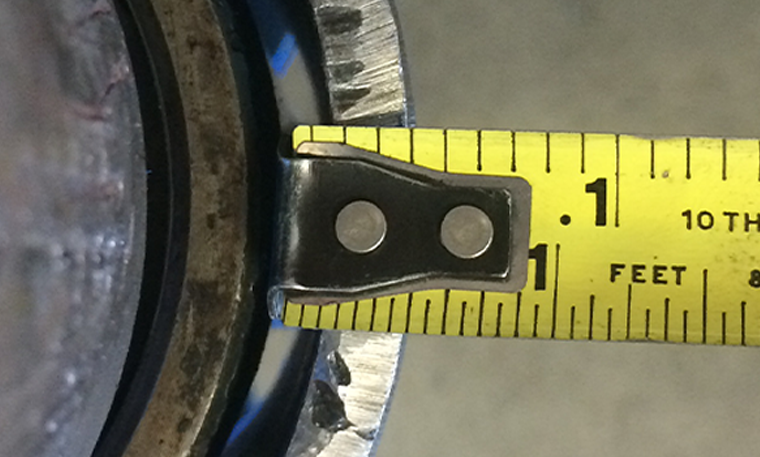
The problem lies in its physical dimensions. Standard B2 anchors have an outside diameter (OD) that is nearly as large as the internal diameter (ID) of the well casing. This extremely tight clearance creates a severe restriction in the annular space. An independent computational fluid dynamics (CFD) research study has shown that this tiny annular area acts as a downhole choke point, generating a significant pressure drop, as well as high kinetic turbulence and vorticity. This turbulent environment can accelerate scale and paraffin accumulation, trap formation gas, and eventually starve the pump.
Overcoming Gas Interference to Boost Pump Fillage
To maximize rod pump performance, you need consistent pump fillage. When downhole fluid flow is choked by a bulky anchor, gas cannot efficiently separate and travel up the annulus. Instead, it gets pulled directly into the pump intake, causing severe gas interference or destructive gas locking.
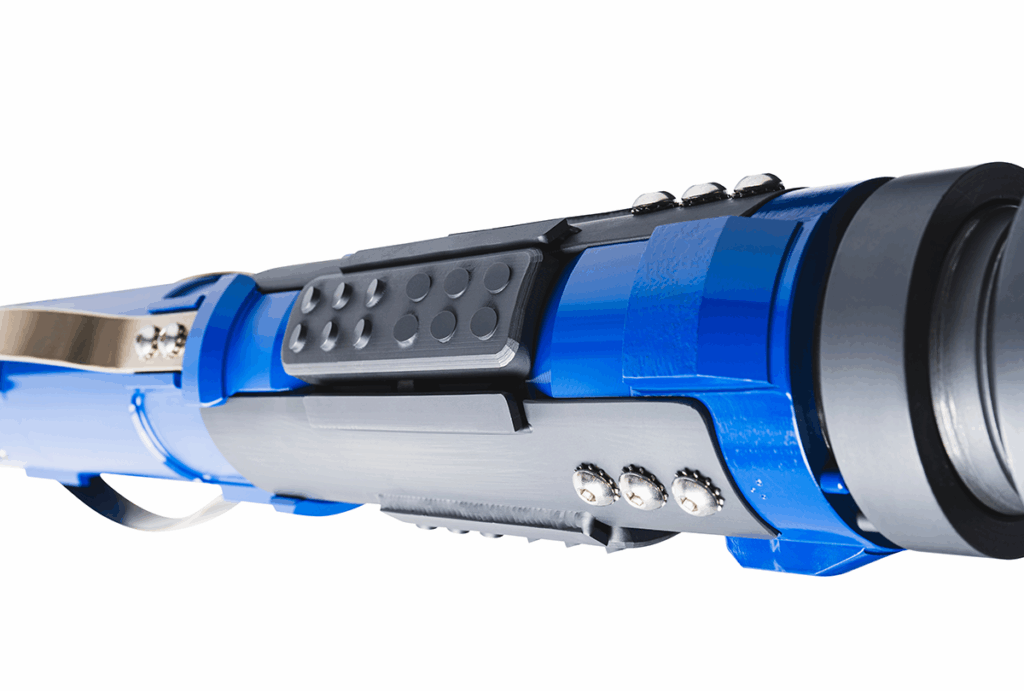
An advanced slim-profile tubing anchor design directly addresses this issue by reducing the tool’s OD, creating more flow-by area than a standard B2 anchor. By opening up the annulus, a slim anchor permits gas to bypass the tool freely and escape up the casing.

Operator case studies have shown that this dramatic reduction in downhole restriction can yield two major benefits for rod pump performance:
- Increased Surface Gas Discharge: With an uninhibited path to the surface, gas vents properly out of the casing annulus. Field data shows that wells converted to a slim-style anchor have seen a 25% to 30% increase in the volume of gas discharged at the surface.
- Superior Pump Fillage Rates: Dynamometer card data confirms that removing gas interference allows liquid to fill the pump chamber completely. Operators commonly experience a 15% to 25% increase in pump fillage rates after making the switch.
Real-World Proof: A 100% Increase in Production
The theoretical advantages of an optimized flow-by area are backed by remarkable real-world field results. Recently, two separate exploration and production (E&P) companies achieved extraordinary performance milestones by addressing this exact downhole restriction.
One E&P company deployed the patent-pending Slimline® Full Bore TAC from TechTAC® across three mature wells suffering from severe gas interference. The innovative anchor features a slim OD while still offering a full bore ID (2.40” on the 5.5” model). The field results were immediate and profound. Without making any other changes to the existing production strings, the wells experienced a surge in efficiency. Over five months of continuous operation, all three wells jumped from producing roughly 40 barrels per day to approximately 80 barrels per day—a staggering 100% increase in production.
Maximize Your Well’s Potential with TechTAC
Improving rod pump performance doesn’t always require expensive surface equipment overhauls or complex chemical treatments. Sometimes, it is as simple as eliminating a common choke point.
If you are ready to replace restrictive standard anchors and unlock your well’s true potential, TechTAC can help. By upgrading to the company’s Slimline TAC, Slimline QuickSet™ TAC or Slimline Full Bore TAC, you can reduce downhole turbulence, mitigate gas interference, and drive production increases. Contact the TechTAC team today to optimize your tool string.


