

Maximizing production while minimizing operational expenses is a primary goal of most businesses. Oil wells are no exception. Sucker-rod pumping systems remain one of the most reliable and widely deployed methods for lifting fluids to the surface. However, the efficiency and longevity of these systems depend heavily on downhole stability. When a production tubing string hangs freely inside a wellbore, it is subject to intense cyclical forces that lead to structural movement, accelerated mechanical wear, and lost energy. To mitigate these costly issues, operators rely on a critical mechanical device: the tubing anchor catcher (TAC). Implementing a high-quality TAC is the most effective way to stabilize rod pumped wells, ensuring peak performance and protecting downhole assets.
Understanding the Forces: Tubing Breathing and Buckling
To understand why a TAC is so essential, one must look at what happens in an unanchored wellbore during the pumping cycle. On the pump’s upstroke, the sucker rod string lifts the fluid column, shifting the heavy hydrostatic load from the tubing to the rods. This sudden relief causes the tubing string to contract. On the downstroke, the fluid load shifts back onto the tubing, causing it to elongate and stretch.
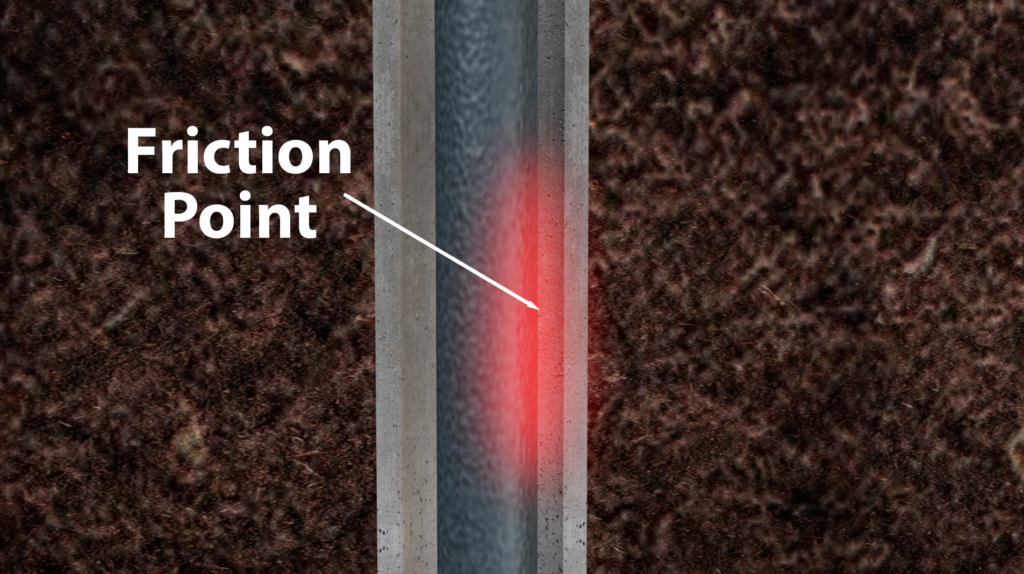
This continuous cycle of stretching and contracting is known as “tubing breathing.” Without restraint, breathing causes severe energy losses by shortening the effective stroke length of the pump plunger. Furthermore, this cyclical compression frequently leads to tubing buckling. When the tubing bends or coils helically inside the casing, it rubs violently against the moving sucker rods. This friction can result in premature wear, rods parting, and tubing failures.
How Tubing Anchor Catchers Stabilize Rod Pumped Wells
Tubing anchor catchers address these destructive dynamics by securely anchoring the production tubing to the casing wall at a predetermined downhole depth. By engaging an expandable slip mechanism, typically via mechanical rotation, the TAC locks the tubing string in place.
Once properly set with a calculated amount of tension, the tubing anchor eliminates tubing breathing and buckling. Here is exactly how this helps stabilize rod pumped wells:
- Optimizing Pump Efficiency: By holding the tubing rigid, the downhole pump maintains consistent plunger travel. The plunger travels its full designed distance, optimizing pump fillage and significantly improving volumetric efficiency. Even in relatively shallow wells of 5,000 feet, using tubing anchors to secure production tubing has been shown to increase production by 10% or more, and that improvement grows exponentially as wells go deeper.
- Minimizing Mechanical Wear: Preventing axial and lateral tubing movement helps mitigate the destructive friction between the sucker rods, production tubing, and well casing. This improvement can extend the lifespan of the pump barrel, rod strings, and tubing.
- The Essential Catcher Safety Function: If the tubing string ever experiences a mechanical separation or parts due to stress, the “catcher” aspect of the TAC stops the parted pipe from falling to the bottom of the well. This function can save operators from highly complex and expensive fishing operations.

Overcoming Traditional TAC Limitations: The TechTAC Innovation
While a standard B2-style tubing anchor catcher has been an industry staple for decades, traditional designs have a known vulnerability. Because the clearance between a standard anchor’s outer diameter (OD) and the casing’s inner diameter (ID) is extremely tight, it often creates a downhole choke point. This restriction traps formation gas below the anchor, which can lead to gas-locked rod pumps and lower production. Additionally, sediment and scale can build up on top of the anchor, cementing it in place.
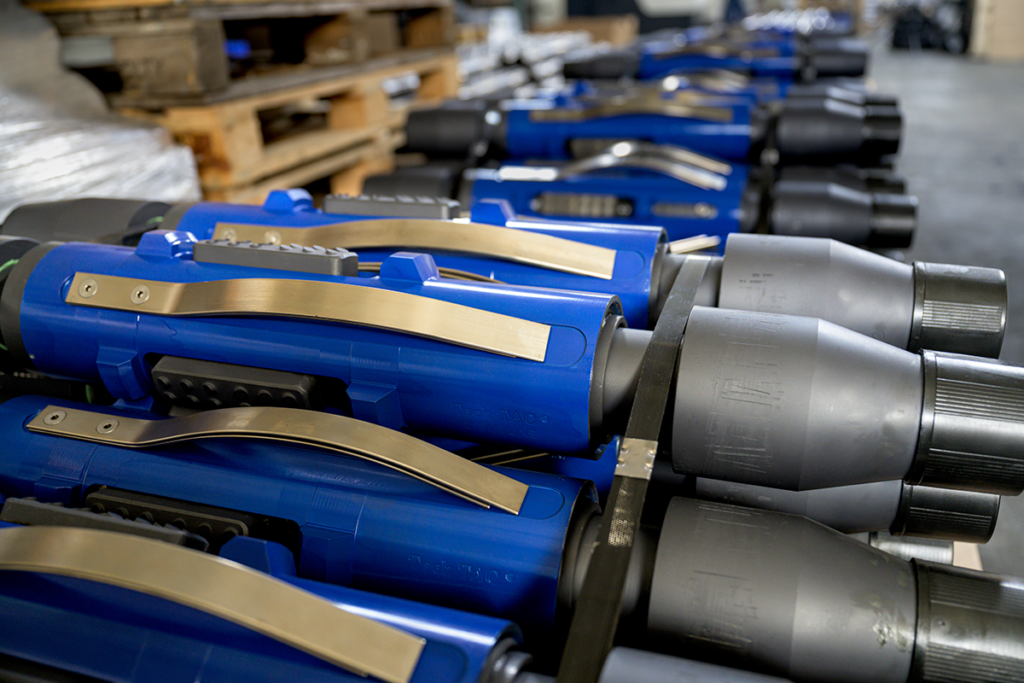
To solve this challenge, TechTAC® engineered the Slimline® Tubing Anchor Catcher. The Slimline TAC has a reduced OD that provides up to 245% more flow-by area in the well’s annulus compared to a standard B2 anchor. According to an independent computational fluid dynamics (CFD) study, this increased flow-by area creates far less pressure drop and turbulence. This unique design permits formation gas and sediment to flow freely past the tool, minimizing gas locking and reducing the frequency of stuck anchors.
Conclusion
Sucker-rod pumps are incredibly robust, but their productivity relies heavily on a stable environment. Utilizing advanced downhole tools to stabilize rod pumped wells protects equipment, cuts down on fishing jobs, lowers lifting costs, and increases overall crude production. For operators looking to optimize wellbore reliability, TechTAC offers a comprehensive suite of American-made anchoring solutions, including the original Slimline TAC, the Slimline® QuickSet™ TAC, and the new Slimline Full Bore TAC. Contact the TechTAC team today to discover how their advanced engineering can elevate your well operations.


