
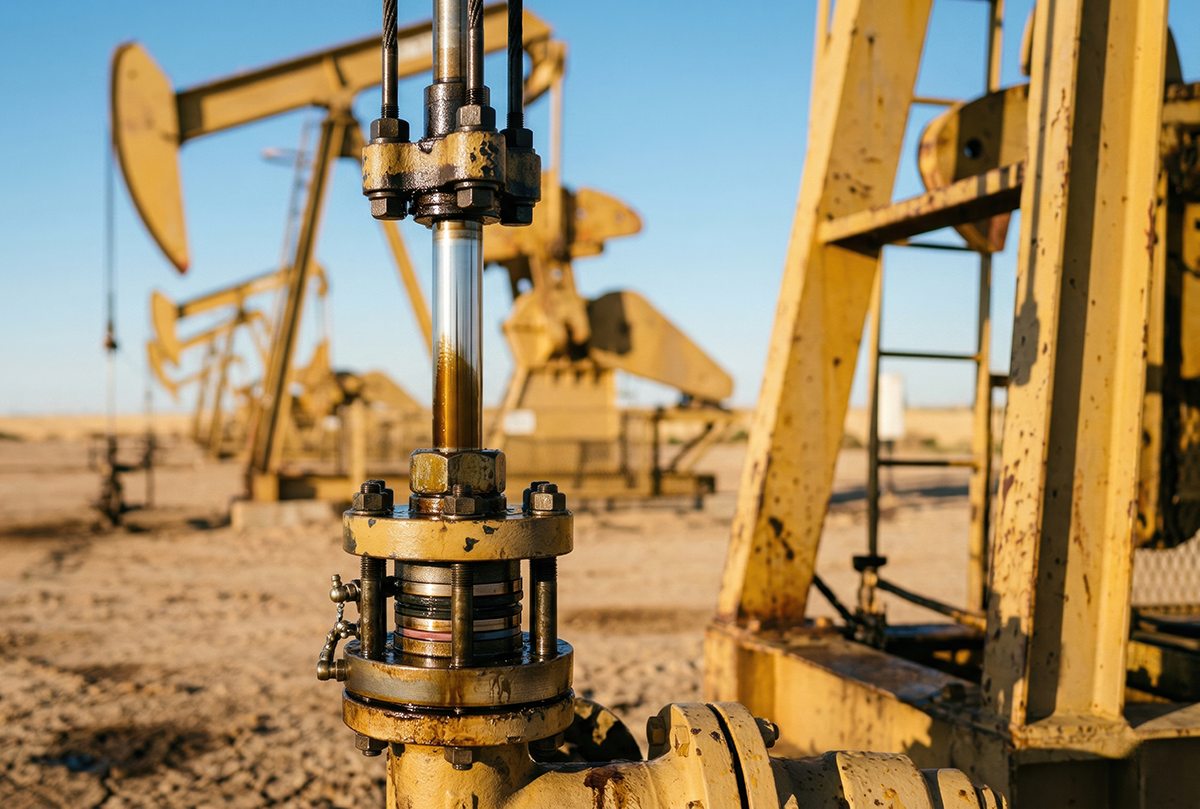
The vast majority of oil wells in North America rely on artificial lift. Among the various artificial lift methods, sucker rod pumps stand out as the time-tested workhorse of the industry. These pumps support more than 70% of the continent’s wells. However, as operators push the boundaries of well depths and drill more complex horizontal geometries, traditional pumping setups face unprecedented downhole challenges.

Fortunately, recent breakthroughs in rod pump technology are revolutionizing production. From digital automation to advanced metallurgy, operators have more tools than ever to boost well efficiency. Yet, one of the most impactful innovations isn’t a complex software program or an expensive exotic alloy. Instead, it is a remarkably straightforward and affordable downhole tool from TechTAC®: the Slimline® Tubing Anchor Catcher (TAC).
Following is a look at some recent innovations in rod pump technology, including how a smarter approach to tubing stabilization is shifting the paradigm for many operators.
Recent Innovations in Modern Rod Pump Technology
Historically, optimizing a rod-pumped well was a matter of manual trial and error. Today, modern rod pump technology leverages a sophisticated ecosystem of surface and downhole enhancements. These are designed to minimize stress and maximize fluid production. Some of these innovations include:
- Smart Automation and Rod Pump Controllers (RPCs): The integration of Artificial Intelligence (AI) and Edge Computing has brought variable frequency drives (VFDs) and sophisticated RPCs to the wellsite. These systems analyze real-time surface and downhole dynamometer cards. They also automatically adjust pump speeds to match true inflow performance and prevent fluid pound.
- Advanced Materials and Coatings: To combat corrosive downhole fluids and the extreme friction of deviated wells, manufacturers are deploying advanced continuous rod strings, ultra-high-strength steel alloys, and specialized polymer guides. These innovations prolong the life of the entire rod string.
- Innovative Pump Designs: From specialized horizontal pump barrels to advanced gas-handling plungers, downhole pumps are being re-engineered to handle harsher solids. They can also manage higher gas-to-oil ratios (GOR).
These high-tech systems can significantly improve run times and production. However, they are only as effective as the underlying downhole stability. If the production tubing string is allowed to move under the massive cyclical loads of the pump, energy is lost. Moreover, components wear prematurely and production decreases.
The Downhole Bottleneck: The Trouble with Standard TACs
To combat tubing movement, operators have long relied on mechanical tubing anchors. A TAC serves a critical dual function. First, it anchors the tubing securely against the casing to eliminate buckling and breathing during the pump stroke. Second, it catches the tubing string if a mechanical parting occurs.
However, standard B2-style anchors also introduce a severe physical limitation. Because their outside diameter (OD) is relatively wide, the annular gap between the anchor and the well casing becomes incredibly narrow. This restriction turns the traditional TAC into a downhole “choke point.”
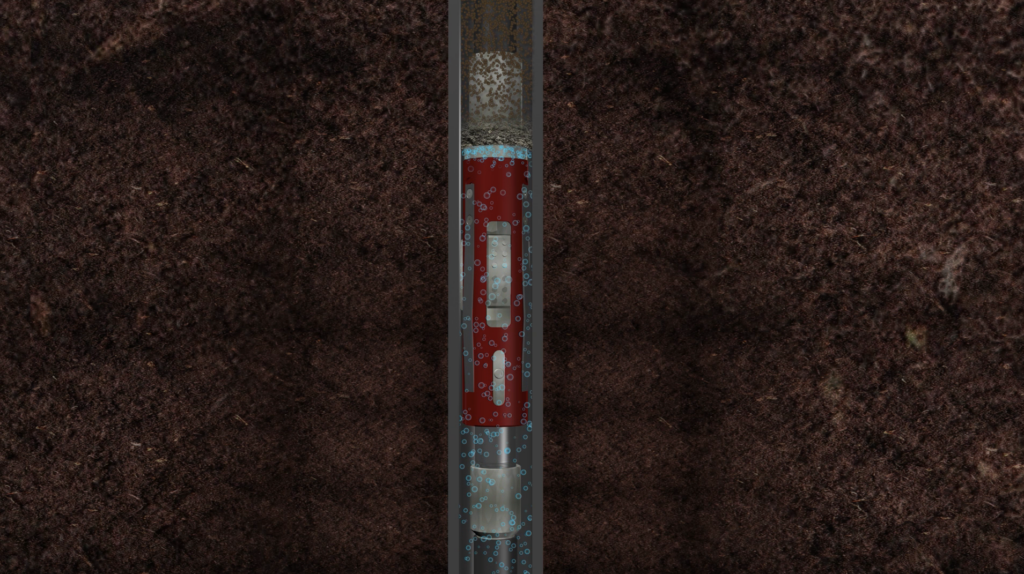
As fluid and gas attempt to squeeze past this restriction, it triggers a significant pressure drop and severe fluid turbulence. This localized pressure drop can precipitate minerals, leading to scale, iron sulfide, and paraffin accumulation around the anchor. This can in turn “cement” the tool in place, requiring an expensive fishing job. Furthermore, trapping formation gas below the anchor routinely starves the pump, which can trigger gas locking and lost revenue.
Simple, Affordable, and Impactful: The TechTAC Slimline TAC
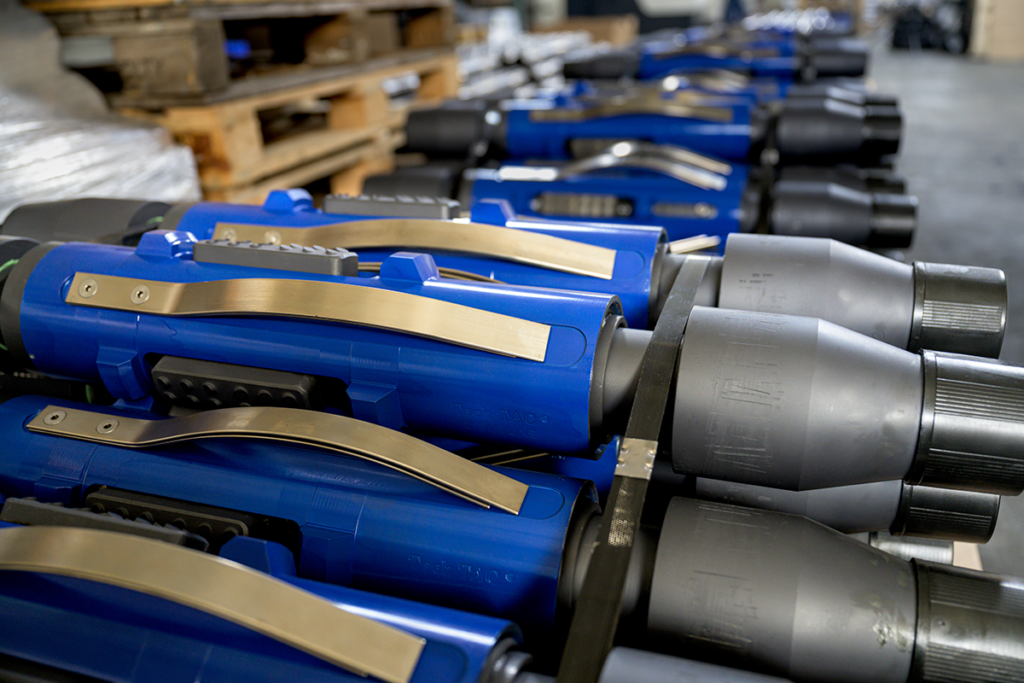
Recognizing this critical bottleneck, TechTAC engineered an innovative but straightforward solution. The Slimline brand of tubing anchor catchers address these complex fluid dynamics problems without a hefty price tag.
By re-engineering the mechanics of the traditional anchor, TechTAC minimized the tool’s outside diameter while maintaining robust structural integrity. The results include:
- Up to 245% More Flow-By Area: By opening the annular cavity between the anchor and the casing ID, the Slimline TAC provides up to 245% more flow-by area than a standard B2 anchor. Gas bubbles can freely migrate up the annulus to the surface rather than getting trapped. As a result, gas-locking incidents can be reduced by as much as 80%.
- Laminar Flow and Reduced Scale: Independent computational fluid dynamics (CFD) modeling confirms that the pressure drop around a standard B2 anchor is more than double that of a Slimline TAC. The Slimline’s reduced OD and tapered flow deflectors help to smooth out fluid movement. This design reduces turbulence and mitigates the scale buildup that can strand downhole equipment.
- Lowering Workover Costs: Because sediment and scale aren’t as likely to bridge-off on top of the tapered design, the risk of a stuck anchor is greatly reduced. In a worst-case scenario requiring the tool to be cut over, the Slimline TAC’s design allows operators to cut over it in a fraction of the time of a standard B2 anchor. This is possible because only the slips and slip protectors need to be cut.
Real-World Proof
The impact of integrating the Slimline TAC into your rod pump technology strategy can be significant. Operators switching to the Slimline TAC frequently report production increases of 20+% thanks to superior pump fillage and optimized plunger travel. In another case study, a U.S. operator with a well that had to be pulled every three months due to scale installed a Slimline TAC. The operator then successfully extended the well’s runtime to over two years without a single intervention.
As the industry pursues promising digital oilfield technologies, the Slimline TAC serves as an important reminder that mechanical optimization can be just as valuable. By resolving downhole restrictions, optimizing fluid flow, and protecting equipment longevity, this effective and affordable tool represents a significant upgrade in modern rod pump technology. To learn more, contact the TechTAC team today!


