

The technology of the moment is certainly artificial intelligence, or AI. Stories about its uses and potential applications are everywhere – and the oil industry is no different. Following is a roundup of some of the latest perspectives on how AI will impact the oil and gas industry:
Improving Demand Forecasting
In a recent post, software firm Appinventiv highlighted many promising use cases for AI in the oil patch. One of the key applications cited in the article is demand forecasting:
“Traditional methods of demand prediction often fall short in handling the complexities of today’s global energy markets. This is where AI solutions for oil and gas, powered by advanced machine learning algorithms, are revolutionizing demand forecasting processes.
“AI models can uncover intricate patterns and correlations that human analysts might miss by analyzing vast amounts of historical data, market trends, geopolitical events, and even social media sentiment. This empowers companies to make well-informed decisions based on data-driven insights.”
Automating Corrosion Detection
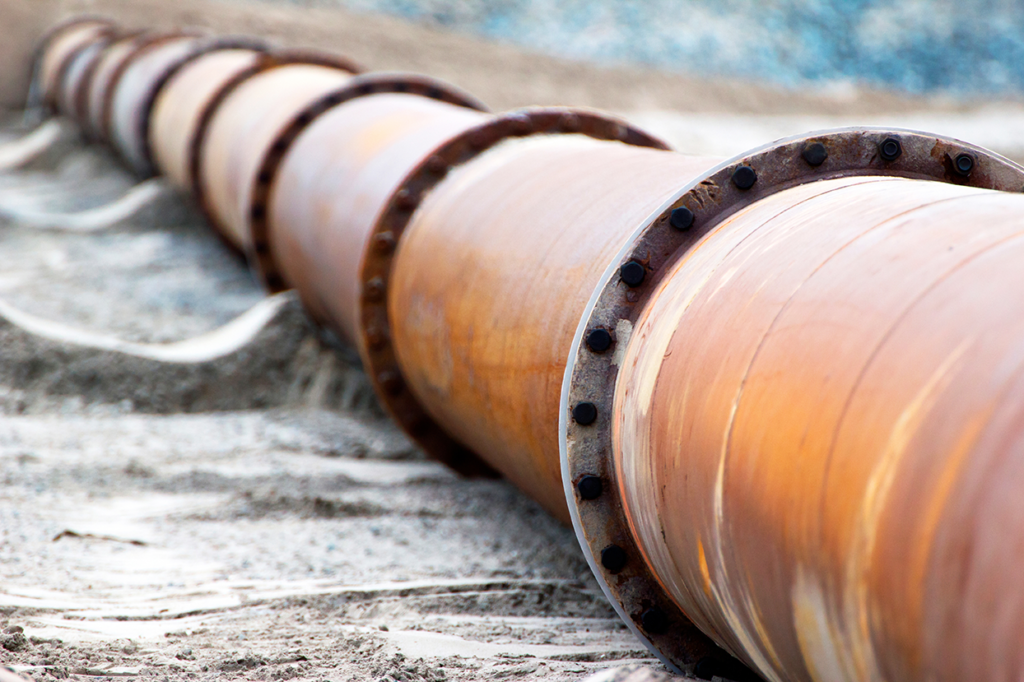
A related post from consulting firm V-Soft Consulting noted the potential applications of AI to reduce production and maintenance costs. The article describes one approach to automating corrosion detection:
“Oil or gas extracted using oil rigs is stored in a central repository and then distributed across pipelines. Due to various temperatures and environmental conditions, oil and gas components often face material degradation and corrosion. Corrosion can cause component deformation, which results in faded threading or can weaken the pipeline itself. Not handling this problem can result in catastrophic damages halting the entire production process. This is one of the biggest concerns of the industry and companies employ corrosion engineers to monitor and handle the health of components to avoid corrosion activities….
“AI solutions can prevent incidents like this from occurring. AI and [internet of things] technologies can detect signs of corrosion by analyzing various parameters using knowledge graphs and predictive intelligence to approximate the corrosion occurrence probability and raise alerts to pipeline operators. This way companies can be proactive in handling the corrosion risks and moreover, based on knowledge graph analysis, study various machinery downtimes and predict time to carry out maintenance activity. This way, companies plan and adjust for downtime.”
Enhancing Workplace Safety

Finally, Acuvate, another digital consulting and services firm, describes how AI could drive greater workplace safety:
“Powerful technologies like AI … monitor on-field operations to identify fatal signs, such as hazardous gas levels and unauthorized personnel access.
“AI-enabled chatbots then issue real-time alerts on mobiles and smart wearable devices, such as health or lockout emergency notifications, permitting them to work on-field, thus creating a more connected on-field workforce.
“Additionally, smart watches, safety helmets, biometric vests, and Bluetooth tags monitor workforce activities, track field operator locations, identify signs of workforce fatigue, and enable access to critical information on the field.
“…AI can detect and troubleshoot on-site hazards in real-time or send notifications to dispatch experts as and when required.”
AI in the Oil and Gas Industry
The adoption of AI is also cited as a key trend in Deloitte’s 2024 Oil and Gas Industry Outlook. The report states:
“The O&G industry has often been at the forefront of adopting cutting-edge technologies to bolster operational efficiency, curtail costs, and advance safety and sustainability measures. In recent years, artificial intelligence has emerged as a transformative force for the industry, with applications across the O&G value chain, from initial resource exploration to the intricacies of refining processes. Among applications, AI-driven predictive maintenance is instrumental in achieving a multitude of objectives, including cost reduction, heightened productivity, and the assurance of operational reliability for the industry.”
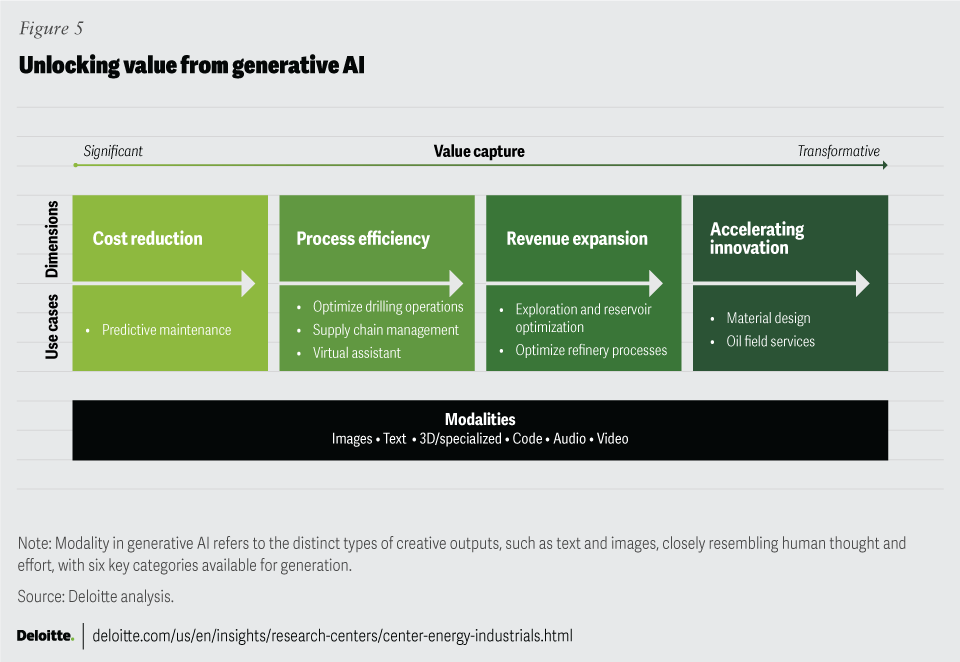
The Deloitte study goes on to highlight four key dimensions that outline the potential value of generative AI – a branch of AI that creates new content, such as images or text – as described in the figure below:
In the years to come, as efficiency, safety, and sustainability become ever-more important to the success of oil and gas companies, it’s likely that AI technologies will be an increasingly vital part of that transformation.


