
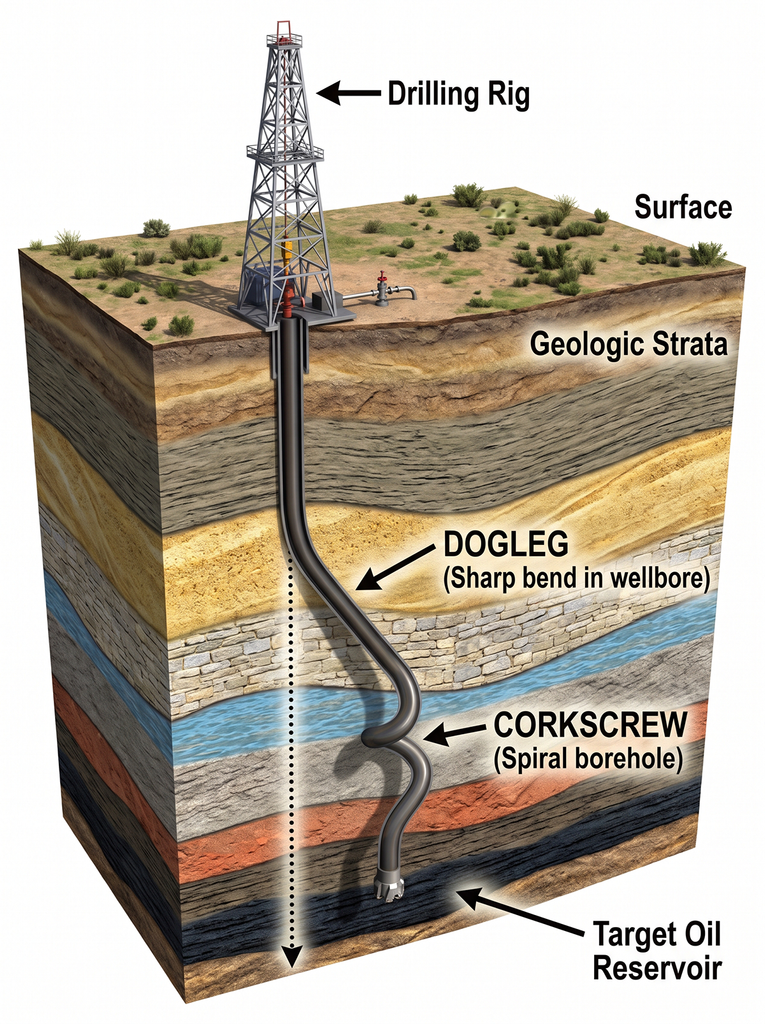
In a relatively straight vertical well, choosing a tubing anchor catcher (TAC) is usually straightforward. But when the wellbore features significant deviations and corkscrews, that choice becomes one of the more consequential downhole tool decisions an operator will make. The anchor that looks right on paper still has to set at depth – and every bend between the rig floor and the tool makes that harder.
The Rotation Problem
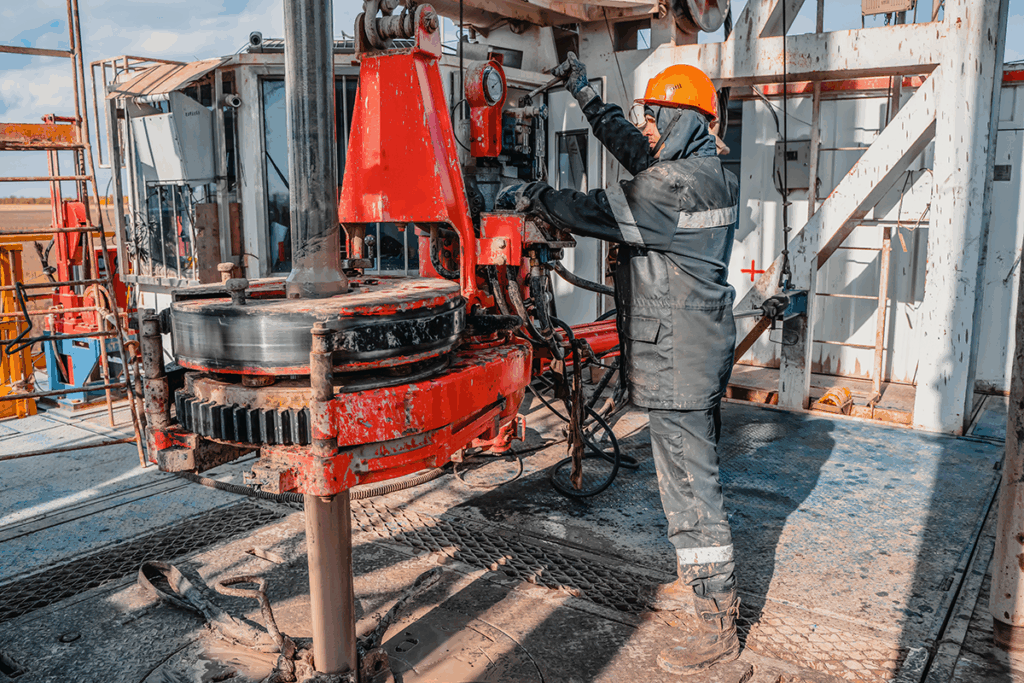
A traditional mechanical TAC needs 6-to-8 turns at the tool to set fully. In a vertical hole, turns at the surface translate almost one-for-one down the string. In deviated wells, the tubing doesn’t hang freely. Gravity lays it against the low side of the casing through every build section and tangent, and each dogleg presses it harder against the wall. Every point of contact steals some of the rotation applied at the surface.
The Math Behind Lost Torque
Torque-and-drag engineers model this with the soft-string method: the torque lost over any length of pipe equals the friction factor × the side force pressing the pipe against the casing × the pipe’s radius. Side force rises with inclination and with every change in angle or direction, so the losses compound through each curve.
Consider an illustrative 2-7/8-inch, 6.5 lb/ft tubing string in a well with a 3,000-foot tangent at 60° inclination. Buoyed in well fluid, the tubing in that section rests on the casing and, depending on fluid density and the buoyancy adjustment, exerts roughly 14,800 pounds of side force. At a typical cased-hole friction factor of 0.25, that’s about 440 ft-lb of torque lost to friction – before a single dogleg is counted.
Tubing also behaves like a long torsion spring. Assuming a constant 400 ft-lb along its full length, a 9,000-foot string would twist roughly 2.5 turns before any torque reaches the tool. (The actual windup depends on well conditions and torque distribution.) Add the torque the tubing anchor itself needs to set, plus the extra side force through doglegs, and an anchor that needs 6-to-8 turns at the tool can demand far more at the surface, while still being subject to the tubing, connection, and equipment torque limits.
Hydraulic and Quarter-Turn Anchors
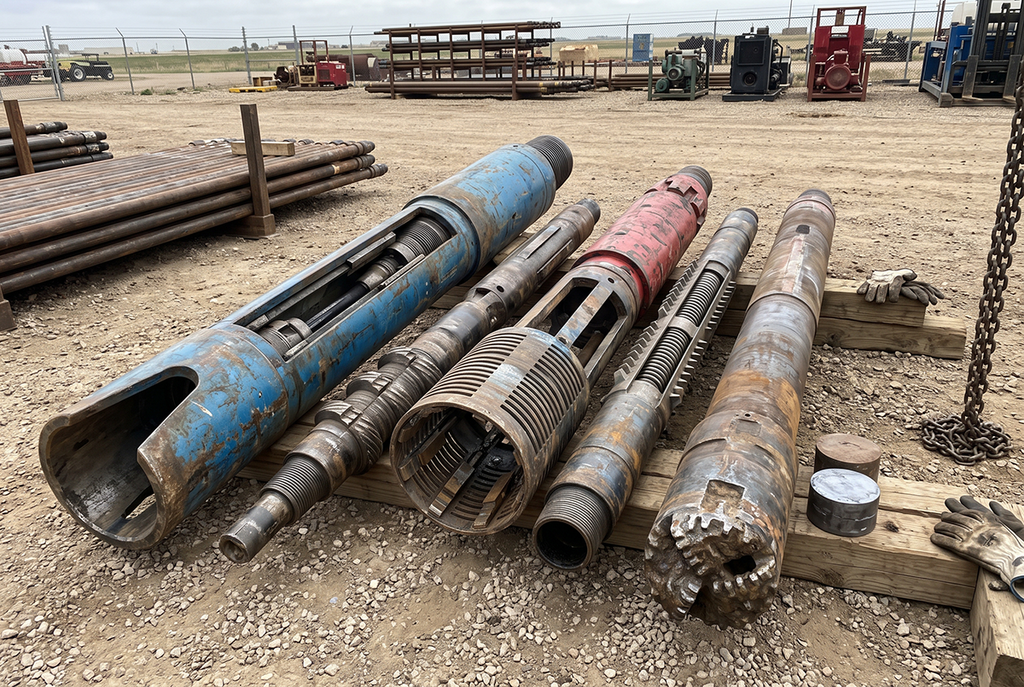
In these situations, operators typically turn to one of two workarounds: hydraulic anchors or quarter-turn tension anchors. Hydraulic anchors eliminate setting rotations, while quarter-turn anchors reduce the rotations required at the tool.
The Trade-Offs
The first trade-off is protection. Most hydraulic and quarter-turn anchors are tension anchors, not catchers. They hold the tubing string in tension, but if the pipe parts, nothing stops it from falling down the well. In a deviated well, that fish can come to rest in the curve or the lateral – the hardest places to recover it.
The stakes are real. A 2023 Southwestern Petroleum Short Course paper compared two wells in the same Permian Basin field. In the well with a catcher, the parted assembly was held above the liner and recovered in three days. In the well without one, the operator spent more than two months fishing, never recovered the fish, and ran up more than $1 million in expenses, not counting equipment.
The second trade-off is price. Hydraulic and quarter-turn anchors typically cost 2 to 3 times as much as a mechanical TAC – before accounting for any of that fishing risk.
A Mechanical Alternative Built for Deviation
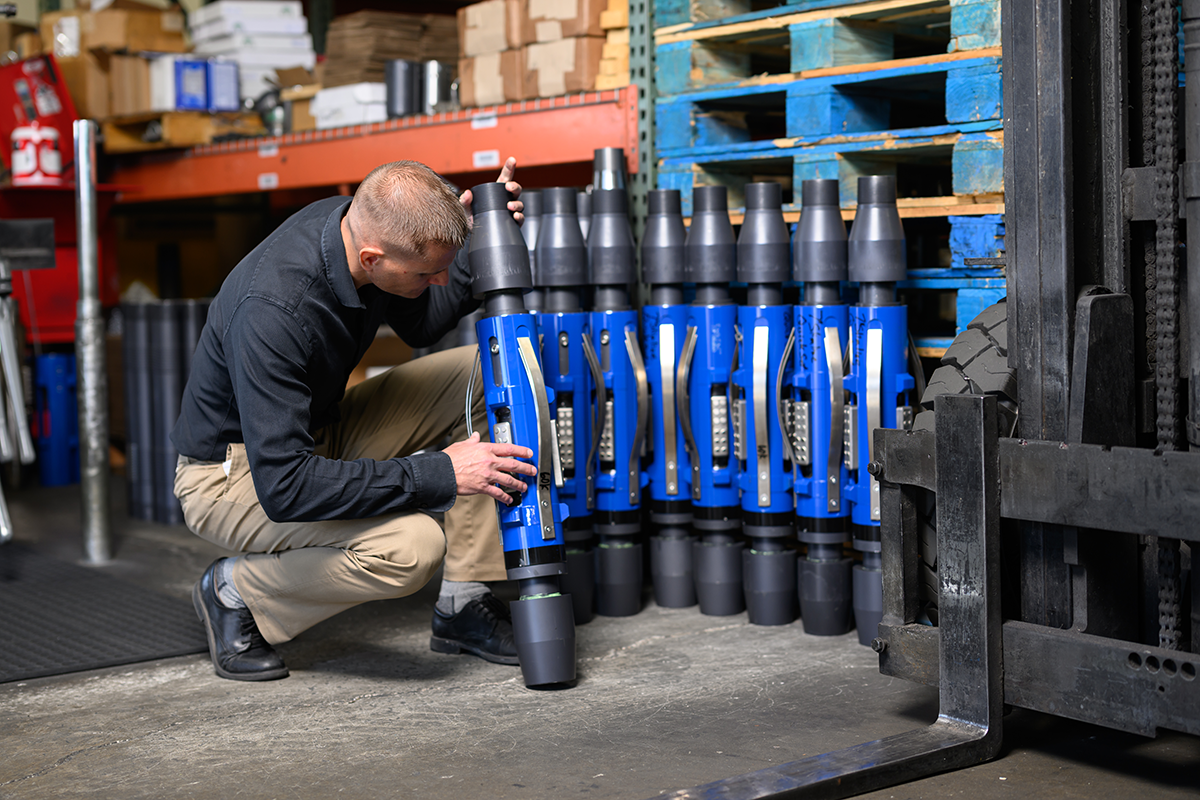
The Slimline® QuickSet™ TAC from TechTAC offers a third path. It’s still a mechanical tubing anchor catcher, so it keeps the catching capability and economics of a mechanical TAC. But its patented design allows it to be fully set in just 1-to-3 turns, instead of the traditional 6 to 8 – so far less of the rotation applied at the surface has to survive the trip down a crooked hole. It also retains the Slimline design, with up to 245% more flow-by area than a standard B2 anchor.
"That [Slimline] QuickSet anchor is money! It's been a game changer. We needed it five years ago."

–Engineer with a Fortune 500 energy company
The Bottom Line
In deviated wells, the right TAC is one that will actually set, will catch the string if it parts, and won’t blow up the completion budget. If your well plan has you weighing a hydraulic or quarter-turn anchor because of torque concerns, contact TechTAC to see whether the Slimline QuickSet TAC is a better fit.


